
-
2026 Week 1: UC Davis @ Portland State97 degrees in Portland in September is mind boggling to think of but that's the world we live in now with rapidly escalating climate change. Hopefully, it won't be that hot this year but, if it is, the experience may help the us manage playing in the extreme heat and humidity that we'll surely be playing in on September 12th at 1 pm in Dallas against SMU.
-
FIFA World Cup 2026Argentina storms back from a 2-0 deficit with goals in the 79th, 84th and 2 minutes into the 2nd half stoppage time. Magnificent Messi tied the game in the 84th minute with his 21st goal in World Cup play and he was in tears at the end of this game.
Switzerland eliminated Columbia on penalty kicks 0-0 (4-2 shootout). -
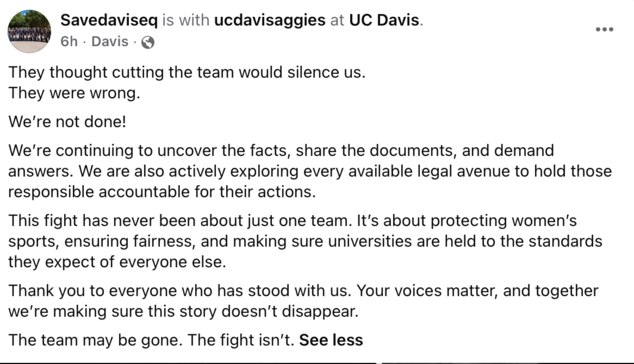
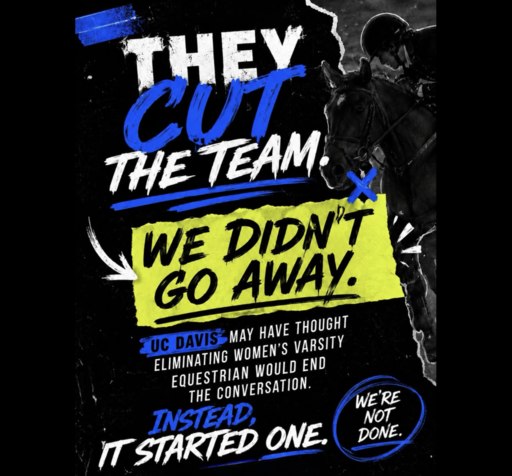
UC Davis equestrian teammates file federal lawsuit DI program cutIt looks like this isn't going to go away anytime soon.
-
FIFA World Cup 2026It was a great run by the Americans but a disappointing ending in their 4-1 loss tonight to Belgium. Simply way too many defensive mistakes against a superior opponent.
Spain advances to the quarterfinals with a 1-0 win over Portugal and will play Belgium. -
FIFA World Cup 2026I have mixed emotions. I didn't feel like a red card was justified and I'm glad that Balogun gets to play.
However, the FIFA President, Gianni Infantino, has been courting Trump's favor for a long time and even gave him the fake FIFA Peace Prize, which he just made up so he could stroke Trump's vanity and gain his favor. The big downside of getting the red card overturned is that it has outraged all the other teams and, no matter what the Americans accomplish tonight and, perhaps further, it will be forever tainted from the viewpoint of the rest of the soccer world. -
FIFA World Cup 2026Final scores in the Round of 16 on July 5th:
Norway 2 Brazil 1
England 3 Mexico 2
There's some great soccer scheduled for today:
Portugal vs Spain at 1 pm in Dallas
USA vs Belgium at 5 pm in Seattle -
2027 Football RecruitingPlough and his coaches are killing it on the recruiting trail! We are getting some recruits who are selecting the Aggies over FBS programs like Cal, Stanford, Boise State, San Diego State, Nevada, UNLV, Oregon State, Colorado State, San Jose State, Wyoming and, of course, Sac.
-
FIFA World Cup 2026July 3rd games:
Egypt beats Australia on penalty kicks 1-1 (4-2 shootout)
Argentina 3 Cape Verde 2- Cape Verde loses a heartbreaker on an own goal.
Columbia 1 Ghana 0 -
FIFA World Cup 2026Referee: Raphael Claus
VAR: Juan Ernesto Soto Arévalo
Time: 63 minutes
Incident: VAR overturn. Red card given to USMNT forward Folarin Balogun for serious foul play (SFP).
What happened: U.S. goal scorer Balogun was sent off following a VAR check after what seemed like innocuous contact with Bosnia defender Tarik Muharemovic.
VAR decision: VAR recommended an on-field review for a possible red card for SFP.
VAR review: VAR was uncomfortable with the replays that showed the Bosnian defender's right ankle buckle under contact from Balogun when both players were challenging for the ball. VAR believed Balogun was dangerous in his play and recommended the referee visit the pitchside monitor to review for a possible red card.
Verdict: Balogun can feel unfortunate to be red carded in this situation as, in my opinion, this was not a red card offense. With both players challenging for ball, the contact from Balogun on Muharemovic, while it looked bad in slow motion, was purely accidental and an unfortunate result from two players challenging for possession of the ball in a normal football movement.
VAR made their recommendation to the referee based on slow-motion and still replays, which is not aligned with VAR protocols, as these should be used for only point-of-contact purposes in a red card tackle situation. Once at the screen, however, it would have been a surprise if the referee did not send off Balogun considering the pictures he was presented by VAR.
https://www.espn.com/soccer/story/_/id/49244156/world-cup-var-review-misapplied-protocols-leave-usmnt-folarin-balogun-wrongly-red-carded-world-cup-vs-bosnia-herzegovina -
USA Men's World Cup following Aggie Max ArfstenThat was a bogus red card on Balogun. Two players coming together suddenly and jostling for the ball and Balogun inadvertently steps on the other player's ankle. The ref allowed lots of pulling shirts, grabbing and hard fouls without even pulling out his yellow card but gives Balogun a red card when the player cut in front on him and Balogun steps on the back of his ankle inadvertently...no intent to commit a dangerous foul by Balogun...just two players getting tangled up in the action...lousy call...
https://www.espn.com/soccer/story/_/id/49244156/world-cup-var-review-misapplied-protocols-leave-usmnt-folarin-balogun-wrongly-red-carded-world-cup-vs-bosnia-herzegovina -
FIFA World Cup 2026The USA defeats Bosnia & Herzegovina 2-0 and now moves onto the Round of 16 for the first time since 2002. The Americans played the final 36 minutes down a man without their striker and leading scorer, Flo Balogun after he was given a bogus red card in the 64th minute.
The USA will play Belgium in Seattle at 5 pm next Monday, July 6th. Unfortunately, we will be playing without Balogun for this game because of the red card.
Belgium advanced in dramatic, comeback to beat Senegal 3-2 on a penalty kick in the 2nd 15 minute extra period. Belgium was down 2-0 but scored in the 87th and 89th minutes to tie the game and force the extra play and win the game in the 120th minute.
England beat DR Congo 2-0 to advance as well. -
2025 NFL Draft ThreadI expect Larison to make the 53-man roster as the #3 RB and contribute as a Kickoff Return man.
I hope to see some big things from Lan this year! -
UC Davis Athletics Joining Mountain West - Football to FollowI joined MW+ today and was able to use the 15% discount. The total cost for an annual subscription with the discount was $67.99 plus a $6.80 service fee = $74.79.
-
FIFA World Cup 2026June 30 scores:
Norway 2 Ivory Coast 1
France 3 Sweden 0
Mexico 2 Ecuador 0
Tough match for the USA tomorrow vs Bosnia & Herzegovina at Levi Stadium in Santa Clara at 5 pm. It should be and exciting game with the American star, Christian Pulisic back from injury and most certain to be in the starting lineup. -
UC Davis Athletics Joining Mountain West - Football to FollowHere's the link to the MW+ streaming service where you can sign up to be eligible for the 20% discount when they start taking orders. It looks like the first event for the Aggies will be Women's Soccer at the Air Force Academy on September 24th. Games for Women's Soccer and Women's Volleyball and Men's Soccer are listed through November 19th.
https://watch.themw.com/uc-davis/?utm_medium=email&elq_cid=114790&ehash=7117502a313e7373ca6ac8c50f670759457d9820fe4a2f6331be4286b4f35a91&ra=uc-davis&elqTrackId=5B5F364B7B1BE4C7FAED783B3EF7FC9F&elq=ab7d4c7033da4a47af144ccdfec69d68&elqaid=435&elqat=1&elqCampaignId=336&elqak=8AF5AF57BC907649B4B57D86FB24955E4E64808B935D2EACC954CC3960C24AEEB73D -
UC Davis Athletics Joining Mountain West - Football to FollowI signed up today so I would be eligible for the 20% discount. It looks like the cost will be $10.99 per month or $79.99 annually with a 20% discount available.

BlueGoldAg

Start FollowingSend a Message
- Terms of Service
- Useful Hints and Tips
- Sign In
- Created with PlushForums
- © 2026 Aggie Sports Talk